
Showing posts with label Scotland. Show all posts
Showing posts with label Scotland. Show all posts
Saturday, 6 March 2010

Sunday, 14 February 2010

Sunday, 23 August 2009
Loch Leven

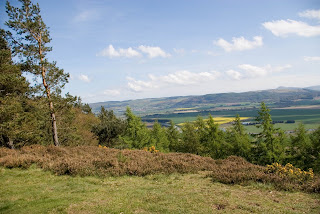
That Hideous Man has reminded me of a morning that I spent with the Fish Wife around Loch Leven last year, we climbed the same hill, and took similar photos (merged in to this panorama). It is truly beautiful - and more or less on our doorstep.
There's also a nice farm shop sort of place at the northern end of the loch, for food etc.
How much we take for granted!
Sunday, 7 December 2008
Fire in the sky

This photo was taken this morning. It's completely un-edited, not 'Photoshop-ed' - just as it was snapped.
The sunrise was breath-takingly beautiful. Words completely fail me... I can't begin to describe it.
In fact, for the last couple of days the light around here has been absolutely amazing. So more images will follow in due course. And later in the week I might even get around to stringing a few words together for an entry (but then again...!)
Thursday, 4 September 2008
Taxation and accountability
This is a real thrupenny thought!
The SNP government in Scotland has published its proposed legislative programme for the parliamentary session, including plans for a “Local” Income Tax to replace the current Council Tax system.
As I understand it, the proposal is to abolish the Council Tax, which is a property based tax set and collected separately by each of the 32 local authorities in Scotland. (By the way, the thrupenny bit comes in because it’s likely that the proposals would add 3pence to the existing Income Tax rate.)
Now I need to declare a pecuniary interest in this. First of all, I work in local government; secondly I’ll be a ‘loser’ financially if the SNP proposals ever make it to the statute books.
Predictably there’s been a party political stooshie about this with all sides adopting their familiar, entrenched positions. But I want to spend a few moments thinking through some of the underpinning issues as I see it.
All parties in Scotland seem to agree that the existing Council Tax regime is unfair. So what constitutes a fair system of taxation? Ideally it should reflect consumption of the end product and to some extent reflect ability to pay.
Neither the Council Tax nor any form of ‘local’ income tax will reflect consumption, and any attempt to measure the use of local government services by each citizen/ family would be so hideously complex and contentious that it would be completely unworkable. Income tax does come closer to measuring ability to pay.
What else do we need to consider?
Cost of collection is surely an issue. To collect Council Tax, each local authority needs to have staff and systems to notify citizens of the amount that they are each due to pay, collect these amounts through a variety of methods, and chase those who choose not to pay. There is a also a system for assessing individual relief from payment due to individual financial circumstances. On the other hand, it is argued that Revenues and Customs already collect money from all income tax payers, so varying the percentage to be collected from me shouldn’t be too difficult. It is clearly more straightforward to collect if the rate is set nationally, as opposed to separate rates for each authority.
Of course the big, philosophical show-stopper is about accountability – so the opposition parties say. The argument runs that each Council must be accountable to their citizens for the amount of money collected from taxation to run their services. There is a certain logic to this position – except that Council Tax currently represents less than 20% of the money spent by each local authority. The rest of the money comes through direct charging for services (e.g. use of leisure facilities, payments for social care), business rates AND funding from central government – which in turn comes from INCOME TAX (and other nationally set taxes).
Do citizens judge their democratically elected representatives solely - or mainly - on the basis of how much tax they pay? What view do they take of outcomes and the quality of services delivered? What about ensuring that services are provided to the most vulnerable?
And what about the fact that turnout in local government elections is laughably low and likely to decrease if/when they are de-coupled from Scottish Parliament elections?
In my opinion, if the issue is about fairness then ‘local’ Income Tax wins the argument. This is also true in terms of the cost of collection.
As for accountability – well there’s a real debate around that, if only the politicians were capable or willing to look at it from the citizens’ perspective rather than a party political one. But is there any prospect of a mature debate on this? Not a chance!!
The SNP government in Scotland has published its proposed legislative programme for the parliamentary session, including plans for a “Local” Income Tax to replace the current Council Tax system.
As I understand it, the proposal is to abolish the Council Tax, which is a property based tax set and collected separately by each of the 32 local authorities in Scotland. (By the way, the thrupenny bit comes in because it’s likely that the proposals would add 3pence to the existing Income Tax rate.)
Now I need to declare a pecuniary interest in this. First of all, I work in local government; secondly I’ll be a ‘loser’ financially if the SNP proposals ever make it to the statute books.
Predictably there’s been a party political stooshie about this with all sides adopting their familiar, entrenched positions. But I want to spend a few moments thinking through some of the underpinning issues as I see it.
All parties in Scotland seem to agree that the existing Council Tax regime is unfair. So what constitutes a fair system of taxation? Ideally it should reflect consumption of the end product and to some extent reflect ability to pay.
Neither the Council Tax nor any form of ‘local’ income tax will reflect consumption, and any attempt to measure the use of local government services by each citizen/ family would be so hideously complex and contentious that it would be completely unworkable. Income tax does come closer to measuring ability to pay.
What else do we need to consider?
Cost of collection is surely an issue. To collect Council Tax, each local authority needs to have staff and systems to notify citizens of the amount that they are each due to pay, collect these amounts through a variety of methods, and chase those who choose not to pay. There is a also a system for assessing individual relief from payment due to individual financial circumstances. On the other hand, it is argued that Revenues and Customs already collect money from all income tax payers, so varying the percentage to be collected from me shouldn’t be too difficult. It is clearly more straightforward to collect if the rate is set nationally, as opposed to separate rates for each authority.
Of course the big, philosophical show-stopper is about accountability – so the opposition parties say. The argument runs that each Council must be accountable to their citizens for the amount of money collected from taxation to run their services. There is a certain logic to this position – except that Council Tax currently represents less than 20% of the money spent by each local authority. The rest of the money comes through direct charging for services (e.g. use of leisure facilities, payments for social care), business rates AND funding from central government – which in turn comes from INCOME TAX (and other nationally set taxes).
Do citizens judge their democratically elected representatives solely - or mainly - on the basis of how much tax they pay? What view do they take of outcomes and the quality of services delivered? What about ensuring that services are provided to the most vulnerable?
And what about the fact that turnout in local government elections is laughably low and likely to decrease if/when they are de-coupled from Scottish Parliament elections?
In my opinion, if the issue is about fairness then ‘local’ Income Tax wins the argument. This is also true in terms of the cost of collection.
As for accountability – well there’s a real debate around that, if only the politicians were capable or willing to look at it from the citizens’ perspective rather than a party political one. But is there any prospect of a mature debate on this? Not a chance!!
Friday, 1 August 2008

Friday, 4 July 2008

Monday, 5 May 2008
The blessings of location

We enjoyed a walk up Moncrieffe Hill today (practising for Dolly D's Duke of Edinburgh's Award expedition). It was a wonderful May day - warm sunshine, the vitality of spring all around us, and time spent together. Although it helped to highlight how out of shape I am, it also made me realise how good my life is in so many ways. Living in this part of the world fills me with joy and thankfulness.
And as you read this, spare a prayer for the people of Burma, who are not so fortunate at this time.

Monday, 7 April 2008
Will we, won't we?

We spent a day out and about - as a family, all three of us - with no shopping! And we all enjoyed it.
We dithered and swithered about going out today. The forecast wasn't great; we didn't feel well prepared for walking about the Scottish countryside in unpredictable weather; and getting out of the house seemed to take forever... but we went anyway.
The day was to serve two purposes. Firstly, it was to be a photo day. This was Dolly D's idea, but I didn't need any persuasion, and may become a regular feature of our family time. Secondly, she needed to get some walking done to try out new boots before she goes on a Duke of Edinburgh expedition towards the end of May. Both objectives were fulfilled.
We spent the morning in Dunkeld , had lunch, then went for a walk past the Hermitage to Rumbling Bridge. It was thoroughly enjoyable for all of us, so hopefully we'll keep going and spend a bit more quality time together.
The photo is of Dunkeld with the Cathedral near the centre of the frame. (More photos later in the week.)
Thursday, 20 March 2008
Time for reflection
Every week in oor wee Parliament, the business begins with 'Time for Reflection'. A speaker is invited to give the parliamentarians something to think about, and until yesterday it has always been a religious/ spiritual worthy who has been invited to fill this slot.
Yesterday the speaker was the erstwhile MP Tony Benn. I've always admired Tony Benn (much more than the other former Labour MP 'TB'!) Benn strikes me as a man of principle, and while I don't always agree with what he says, he seems to speak from a sense of conviction. You can find his talk here. I was intrigued to find that he has connections with Irvine (where my dad was born, and I was brought up).
Yesterday the speaker was the erstwhile MP Tony Benn. I've always admired Tony Benn (much more than the other former Labour MP 'TB'!) Benn strikes me as a man of principle, and while I don't always agree with what he says, he seems to speak from a sense of conviction. You can find his talk here. I was intrigued to find that he has connections with Irvine (where my dad was born, and I was brought up).
I liked the conclusion to his talk yesterday:
"We live at a time in history when the power of nuclear, chemical and biological weapons to destroy the human race is as never before, yet it is also a time when we have the resources, the technology, the know-how and the money to solve the problems of the human race. That is the most important choice that humanity has ever had to make, and it raises fundamental moral questions. If we are to make the right decisions, we would do well, I believe, to listen to the prophets, rather than the kings."
This was a good message to give our current crop of politicians - and the rest of us!
I wish we had more politicians like Tony Benn - sadly we don't.
Saturday, 8 March 2008
Ya beauty-y-y-y!!!!!
How good was that?
Awesome or what?
Passionate and gutsy - aye, we expect that!
Clever tactics, clinically executed - that's new, but very welcome.
In case you haven't guessed I'm talking about today's rugby:
Epic!!!
I'm going to lie down somewhere now to calm down a bit.
Awesome or what?
Passionate and gutsy - aye, we expect that!
Clever tactics, clinically executed - that's new, but very welcome.
In case you haven't guessed I'm talking about today's rugby:
Scotland 15 - England 9
Epic!!!
I'm going to lie down somewhere now to calm down a bit.
Sunday, 24 February 2008
When will winter end?
 This is not a plaintive cry about grey skies and chill winds.
It’s actually a question that I have asked myself round about this time every year. We grow autumn-fruiting raspberries, and they need to be pruned in late winter. But just when is that? Well, it’s before there’s any new growth – defining things by the absence of something is not entirely helpful. Anyway, pruned they must be.
There’s a logic that says, ‘These are tough plants, you won’t do any harm’. But there’s an equally logical position that says, ‘This is Scotland! You can get snow in late April, so it makes no sense to cut them now’. But if you leave it too late, you run the risk of damaging the new growth.
So why am I boring you with this (assuming anyone’s still reading at this stage)? Well, as I spent a very productive morning sorting out my raspberries, I thought that there were various metaphors and parables emerging.
Sometimes we need to prune things in an apparently harsh way for them to be fruitful – even when this seems counter-intuitive. Acting too late can do more damage than being a wee bit premature.
Pruning alone will probably lead to a decent crop of berries in the late summer/
 autumn; but if you also weed thoroughly and provide a mulch of compost, you’re more likely to get a fantastic crop.
Since we garden organically, there’s a real pleasure in mulching with home produced compost, and knowing that the pruned raspberry canes will be shredded and used to mulch our other fruit bushes (blueberry, blackcurrant and bramble) is quite satisfying.
Then there’s the promise of fruitfulness in place of dry, dead canes – albeit with a healthy dose of faith needed.
Finally there’s the benefit of being out in the fresh air for a couple of hours – and feeling physically and spiritually refreshed as a result.
Here’s hoping for a bumper crop from the raspberries and the thoughts that emerged this morning.
Friday, 15 February 2008

Tuesday, 29 January 2008
The answers always ...
I heard a song on the radio tonight (The Joyful Kilmarnock Blues by The Proclaimers), which contains the fantoosh lyrics:
The question doesn't matter
The answers always "Aye"
The best view of all
Is where the land meets the sky
I see two problems with this quotation:

1 - my answer is more often "Aye, right!" (meaning "No!")
2 - in this beautiful land of ours there are places where the land doesn't meet the sky - flood water meets the sky.
Well, at least I can do something about one of those issues!
Friday, 25 January 2008

Thursday, 24 January 2008
Ayrshire connections
(Not George Burley - from Cumnock - although I think he'll be a decent manager for Scotland!)
Tomorrow is Burns Night and I'll be wading up to my be-kilted knees in haggis and tartan at a Burns Supper. The austere side of me (there's another side? - I hear you say) doesn't really approve of Burns Suppers. I don't think Burns would have done all that tartan stuff, however, it's a charity fund-raiser and an 'obligation' thing from work. So I'll go and have a good time (I hope!).
Tomorrow is Burns Night and I'll be wading up to my be-kilted knees in haggis and tartan at a Burns Supper. The austere side of me (there's another side? - I hear you say) doesn't really approve of Burns Suppers. I don't think Burns would have done all that tartan stuff, however, it's a charity fund-raiser and an 'obligation' thing from work. So I'll go and have a good time (I hope!).
Anyway, I love Burns. Like me he's an Ayrshire lad. I have always found his poetry evocative and moving and full of passion. He did us a great favour, in my opinion, by collating and saving hundreds of traditional songs.
In recent times, Eddi Reader has recorded a lot of Burns songs, and I have really enjoyed her approach. She was brought up in the same town as me, so I guess that she 'gets' Burns as well. The video below is Eddi singing 'Ae Fond Kiss'.
Why 'Ae Fond Kiss'? Well, it's a fine song, which she sings well. But there's another Ayrshire connection for me. The song is about the ending of one of Burns' affairs, with a woman named Nancy. That's my mum's name, so this one's for my mum.
Wednesday, 23 January 2008
What a difference a day makes!
Typical of the East coast of Scotland. From yesterday's magnificent sunrise to today's gloomy mizzle (mixture of mist and drizzle). I couldn't even see the houses that I wrote about yesterday.
And yet ... there is something to learn from days like today. There is a stillness that seems to pervade everything - even the birds seem quieter, muffled, subdued.
In our human frailty we find it hard to be inspired on a day like today - when you can barely see 100 yards. Maybe we need to find ways of looking for the positives on days such as these. Yesterday, the majesty of creation was awesome; today, was a time to be still and know.
And I'm sure I spotted a tiny chink of sunlight on the horizon as I drove into Arbroath.
When I walk in his mists
he will guide me
if I learn how to trust
in his ways
When I walk in his mists
he will guide me
if I learn to tune in
to his voice
When I walk in his mists
he will guide me
if my life in his hands
I will place
When I walk in his mists
he will guide me.
Tuesday, 18 December 2007
The teachable moment
It’s an interesting phrase, but at the moment it carries negative connotations for me.
Over the past few days there have been a flurry of stories about an aspect of Scottish culture. Not haggis, tartan and shortbread; not the “nearly success” of our football team - but the prevalence of violent attacks (often involving knives) associated with our tendency to binge drink. This is an unattractive aspect of our society.
The teachable moment comes in when nursing staff take the opportunity to highlight the dangers of excessive drinking to the victims of violence – sort of driving the point home. (Of course there’s also an increasing number of violent or aggressive incidents involving nurses in accident and emergency units!).
There is so much to love about Scotland, but also bits to be ashamed of. Will we ever learn? Do we need these teachable moments?
Will we as a society reflect on why our culture is so violent, even compared to that of our near neighbours, who share our delight in binge drinking?
The government is talking about a 10 year strategy. It’s good that they realise the difficulty in changing the ingrained behaviour patterns. Sadly for a lot of people 10 years will be too long – as they will face a lifetime of physical and mental scars – or worse.
Have a happy Christmas – but be sensible too!
Thursday, 8 November 2007
Bright field

The Bright Field
I have seen the sun break through
I have seen the sun break through
to illuminate a small field
for a while, and gone my way
and forgotten it. But that was the pearl
of great price, the one field that had
the treasure in it. I realise now
that I must give all that I have
to possess it. Life is not hurrying
on to a receding future, nor hankering after
an imagined past. It is the turning
aside like Moses to the miracle
of the lit bush, to a brightness
that seemed as transitory as your youth
once, but is the eternity that awaits you.
~ R. S. Thomas ~
This poem (quoted by Stephen Cottrell) can be found in “Soul Food: Nourishing Poems for Starved Minds”, which is a fantastic wee anthology.
on to a receding future, nor hankering after
an imagined past. It is the turning
aside like Moses to the miracle
of the lit bush, to a brightness
that seemed as transitory as your youth
once, but is the eternity that awaits you.
~ R. S. Thomas ~
This poem (quoted by Stephen Cottrell) can be found in “Soul Food: Nourishing Poems for Starved Minds”, which is a fantastic wee anthology.
Subscribe to:
Posts (Atom)

 Posts
Posts


